The challenge
Shopify sells.Who issues the invoice?
Shopify merchants in Croatia must issue fiscalised invoices that follow local tax rules, and Shopify does not do that on its own.
Without an integration, every order means extra manual work in a separate invoicing system.
What we built
From fulfilled orderto fiscalised invoice.
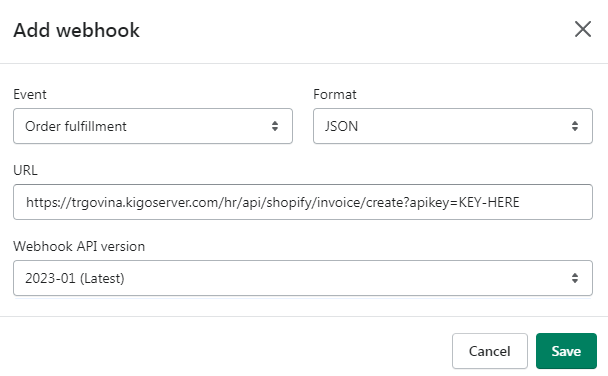
The integration is based on Shopify webhooks and needs no code on the store.
Order is fulfilled
When an order is marked as fulfilled in Shopify, a webhook fires.
Data goes to KigoKasa
The webhook sends the order data to the KigoKasa application.
Invoice is created
KigoKasa builds the invoice from the ordered products and takes the payment and shipping method from the Shopify order.
Fiscalised and sent
The invoice is fiscalised and sent to the customer automatically.
Business rules
Rules that matchreal orders.
Not every order is paid upfront. The integration handles the difference.
- Cash on delivery: if an order is marked as paid before it is fulfilled, an invoice is created; otherwise an offer is created.
- Payment and shipping methods are taken over from the Shopify order.
- Invoice templates can be adapted to the business and local rules.
- Fiscal data and reports support tax obligations and business analysis.
- Cancelling invoices and reviewing issued invoices stays in KigoKasa.
Stack
Technologyunder the hood.
- Shopify
- Shopify webhooks
- KigoKasa
- KigoKasa API
- Croatian fiscalisation
The result
Selling in Shopify,invoicing on autopilot.
Merchants keep working in Shopify while invoicing and fiscalisation run in the background. Setup is a webhook in the Shopify admin, with no programming required.
Today this lives on as KigoCloud for Shopify.